HappyHorse vs OmniHuman: Script-Driven or Audio-Driven Talking Video
Both animate a photo into a speaking clip at similar prices. The difference is what drives the performance — and that decides which one produces a usable result for you.
Two cents a second apart, nominally the same job, and picking wrong means paying a model to regenerate something you already had. The distinction is simple once stated.
Prices checked against the live endpoints on 3 August 2026.
The difference in one line
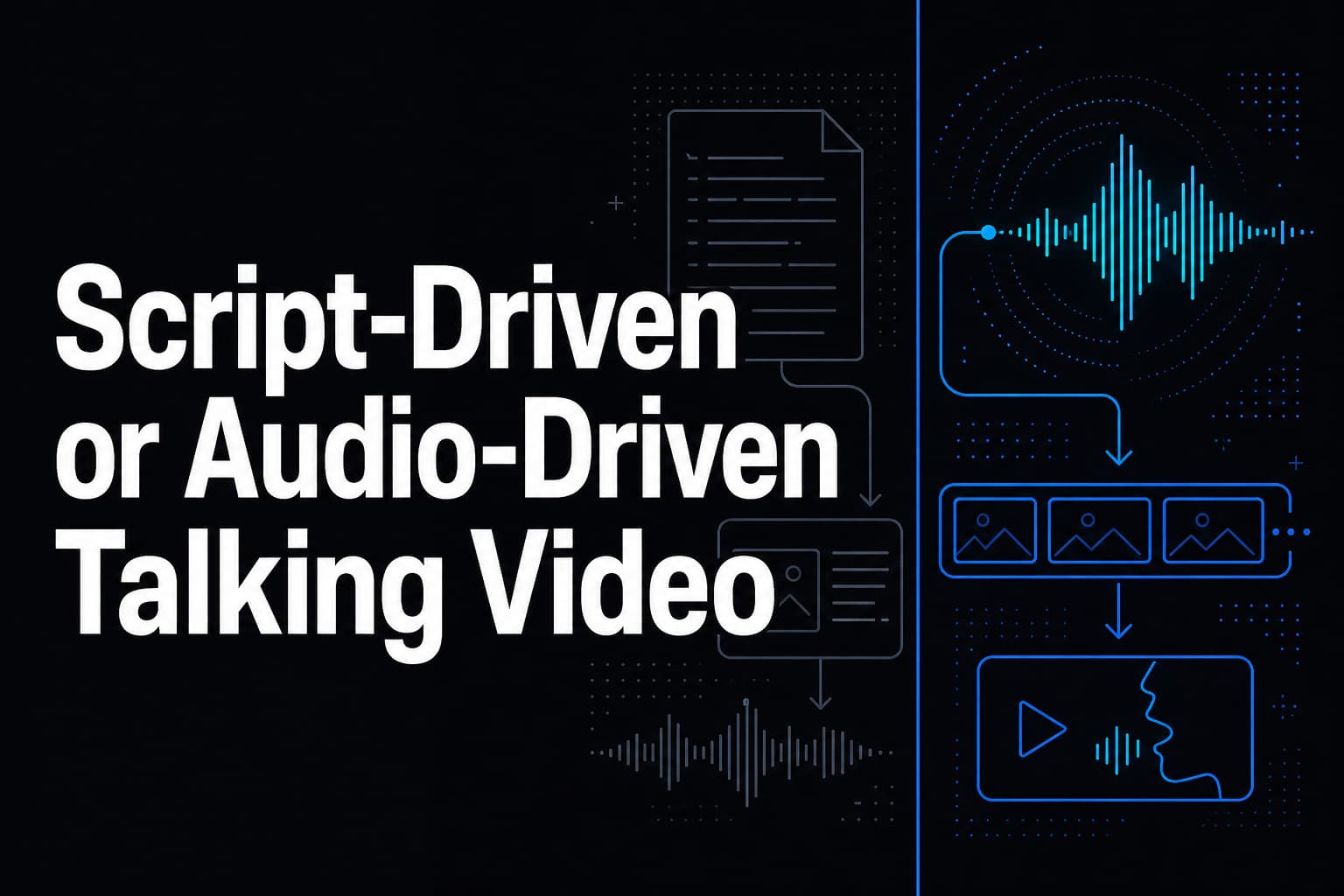
HappyHorse 1.1 Image to Video at $0.14/second takes a photo and a script, and generates the voice itself.
OmniHuman 1.5 at $0.16/second takes a photo and an audio file, and drives the performance from the waveform.
So: do you have a script, or do you have audio? That answers it.
Why the audio-driven path is often better
If you already recorded the voice — your own, a cloned one you have rights to, a commissioned read — OmniHuman's expressions and body movement track the actual delivery. Pauses, emphasis and pace come through, because they are in the waveform.
Generating audio from a script means the model also decides the delivery, and delivery is where most talking-head clips fall flat. For anything where the read carries the content — comedy, persuasion, personality — recording it yourself and using OmniHuman is the better result.
Why the script path is often more practical
One call, one price, done. No recording setup, no file to host, no rights question about a voice.
HappyHorse also handles multilingual lip-sync in the same request, outputs 1080p, and covers nine aspect ratios including real 9:16 and 4:5 — which for vertical social content is genuinely rare. Note the aspect ratio default is 16:9; set it explicitly or you will pay for a landscape clip.
The cheaper alternative to both
Kling AI Avatar v2 Standard at $0.0562/second is less than half either price and is a real talking-avatar model. A 30-second clip is $1.69 against $4.20 on HappyHorse and $4.80 on OmniHuman.
Kling AI Avatar v2 Pro at $0.115 sits between. Our rule: Standard for volume and for anything watched small, Pro or above when the face fills the frame.
What decides quality, on all of them
Restrained motion. "Speaks calmly to camera, slight head movement" holds a face; "gestures energetically while laughing" does not. Free, and the biggest single lever.
Five to eight seconds per generation. Cut several together for anything longer.
A clean source photo. Even frontal light, whole head in frame, no heavy side shadow, no sunglasses.
What neither does
Put the animated head into existing footage. That is Wan 2.7 Edit Video at $0.10/second. And if you have footage that only needs the mouth corrected, that is dedicated lip-sync — HeyGen v3 Lipsync at $0.10/second — not a talking-photo model.
Picking
Script in hand, vertical output, one call: HappyHorse. Audio in hand, delivery matters: OmniHuman. Volume, or budget is the constraint: Kling AI Avatar v2 Standard, and you will be surprised how rarely you need more.